

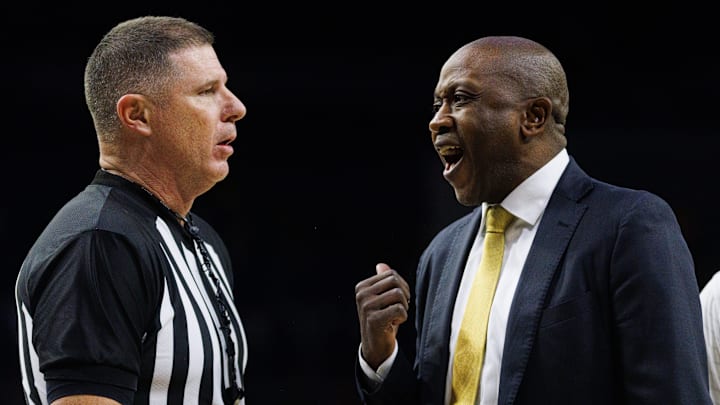
Missouri’s 91–48 loss to Illinois was jarring not simply because of the score, but because of what it revealed. Rivalry games can have blowouts and statistical anomalies. But this one exposed structural issues that the Tigers have been flirting with all season — and ones that will define how far this group can realistically go once conference play begins.
For the first 12 minutes, Missouri looked capable of competing. Anthony Robinson II was aggressive, confident, and decisive, scoring all of the Tigers’ early points and keeping the game tied deep into the first half.
Once Illinois settled in, however, the limitations of Missouri’s roster construction were on full display.
1. Shooting woes continue
The Tigers simply could not score inside the arc, finishing the game at 28.6 percent from the field while rarely getting to the free-throw line. On the other end, the Illini shot 51.7 percent overall, a figure driven not just by shot-making but by repeated second chances and clean perimeter looks created through offensive rebounding.
Perimeter shooting widened the gap further. Illinois connected on 15 three-pointers and shot 45.5 percent from beyond the arc, repeatedly capitalizing on kick-out opportunities after offensive rebounds. Missouri made just six threes and struggled to contest without compromising rebounding position.
2. Rebounding on both ends was non-existent
The rebounding disparity was the defining factor. Illinois controlled the glass from the opening minutes and turned missed shots into extended possessions throughout the night. The Illini scored 29 second-chance points, including 16 during an 18–6 first-half run that turned a 14–14 tie into a commanding lead. Missouri’s inability to secure defensive rebounds allowed Illinois to dictate tempo and momentum, preventing the Tigers from ever stabilizing defensively.
3. Defense was unable to kickstart the offense
The Tigers’ defensive approach, which relies on generating turnovers to offset size disadvantages, failed to produce enough disruption to slow Illinois’ rhythm. Although Missouri recorded eight steals, those extra possessions rarely translated into points. The Tigers’ offensive flow stagnated, reflected in a limited assist total and an inability to consistently create high-quality looks. Illinois’ length cut off driving lanes and eliminated easy scoring chances, forcing Missouri into late-clock shots and contested finishes.
Beyond the rivalry context, the box score from tonight just raises larger questions about Missouri’s margin for error entering conference play.
When the Tigers fail to win the rebounding battle, do not force turnovers at a high rate, and struggle to shoot efficiently from the perimeter, there is little left to stabilize the offense. Illinois did not need to force Missouri into excessive mistakes; it simply won the possession battle, finished efficiently, and leveraged its physical advantages.
The score will linger, but the numbers are more instructive than the margin itself. Missouri was outshot, out-rebounded, and out-executed in every phase. As the Tigers prepare for conference competition, this performance serves as a clear warning that against physical, disciplined teams with size and shooting precision, details are not optional—they are required to stay competitive.
 Add us as a preferred source on Google